Forum Theatre / Moldcell Foundation
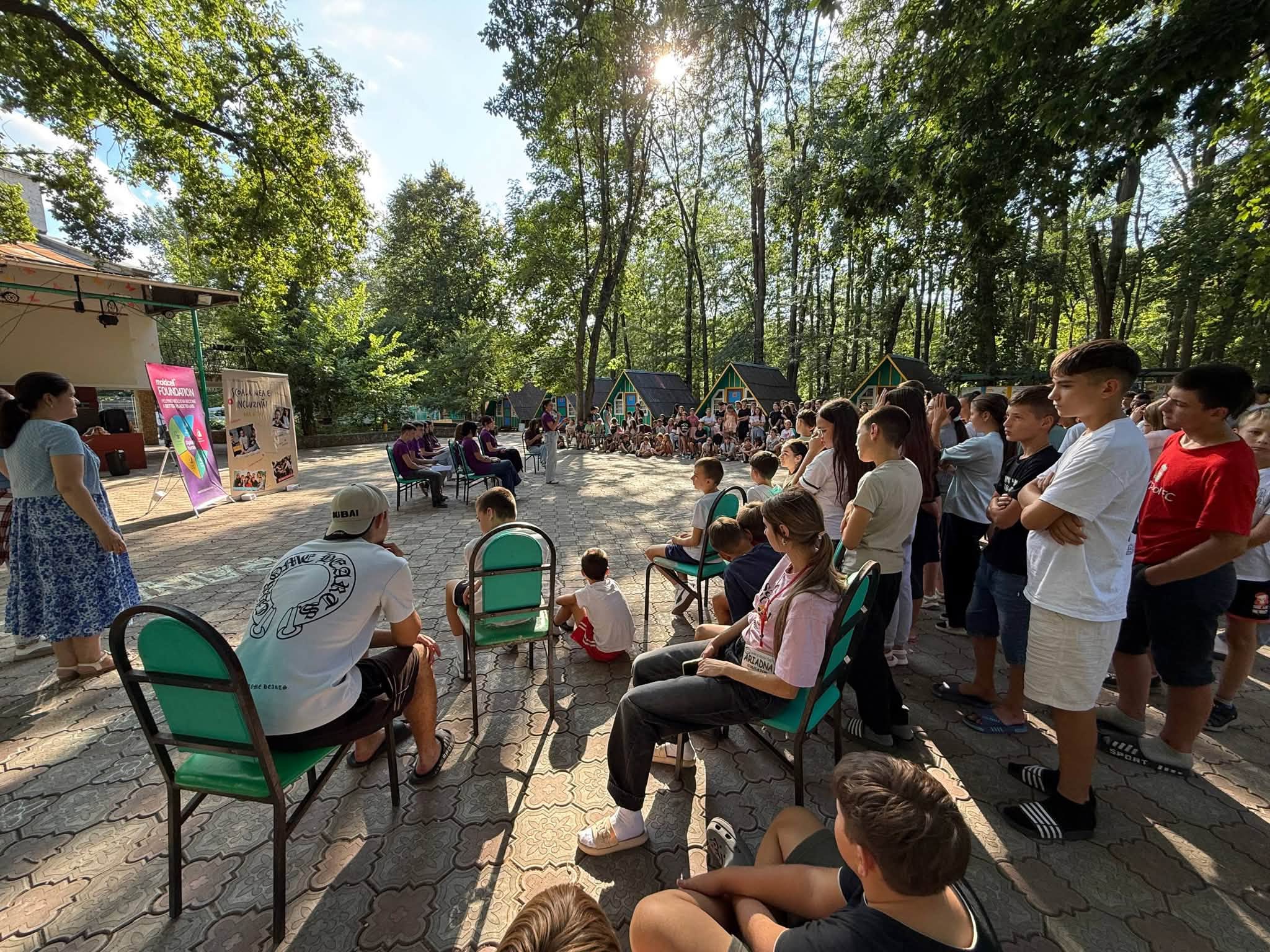
More than 200 children recently took part in a Forum Theatre performance at the “Zâmbet” Camp in Vadul lui Vodă, exploring a question that can make a real difference in difficult situations: What can we do when we see someone being hurt, excluded, or humiliated?
The performance, supported by the Moldcell Foundation, gave children the opportunity to explore real-life situations involving bullying, discrimination, and cyberbullying, while actively searching for ways to respond and prevent such situations.
Rather than simply presenting children with the “right” answers, Forum Theatre encourages them to think critically, express their emotions, and discover what they themselves can do when faced with challenging situations — at school, in their communities, or online.
The first step does not always have to be complicated. It can mean noticing what is happening, refusing to laugh along, asking someone if they need help, speaking to a trusted adult, or choosing to stand beside someone who has been left alone.
The performance in Vadul lui Vodă is part of a broader initiative supported by the Moldcell Foundation. To date, 37 Forum Theatre performances have been organized with the Foundation’s support, creating spaces where children can openly discuss difficult experiences and develop practical ways to respond to them.
For the Moldcell Foundation, supporting initiatives that promote inclusion, dialogue, and the well-being of children is part of its broader commitment to building communities where everyone has the opportunity to participate, feel safe, and be heard.
The initiative is part of the national “Learning Together” campaign, implemented by UNICEF Moldova, the Ministry of Education and Research of the Republic of Moldova, and Dialog Alternativ, in partnership with the Republican Centre for Psycho-pedagogical Assistance, with the support of the Governments of Austria and Norway and the Moldcell Foundation.
Through its continued involvement, the Moldcell Foundation contributes to creating opportunities for children to develop not only knowledge, but also empathy, confidence, and the skills needed to support one another. Because creating safer communities begins with giving children the space and tools to understand what is happening around them — and the confidence to act.