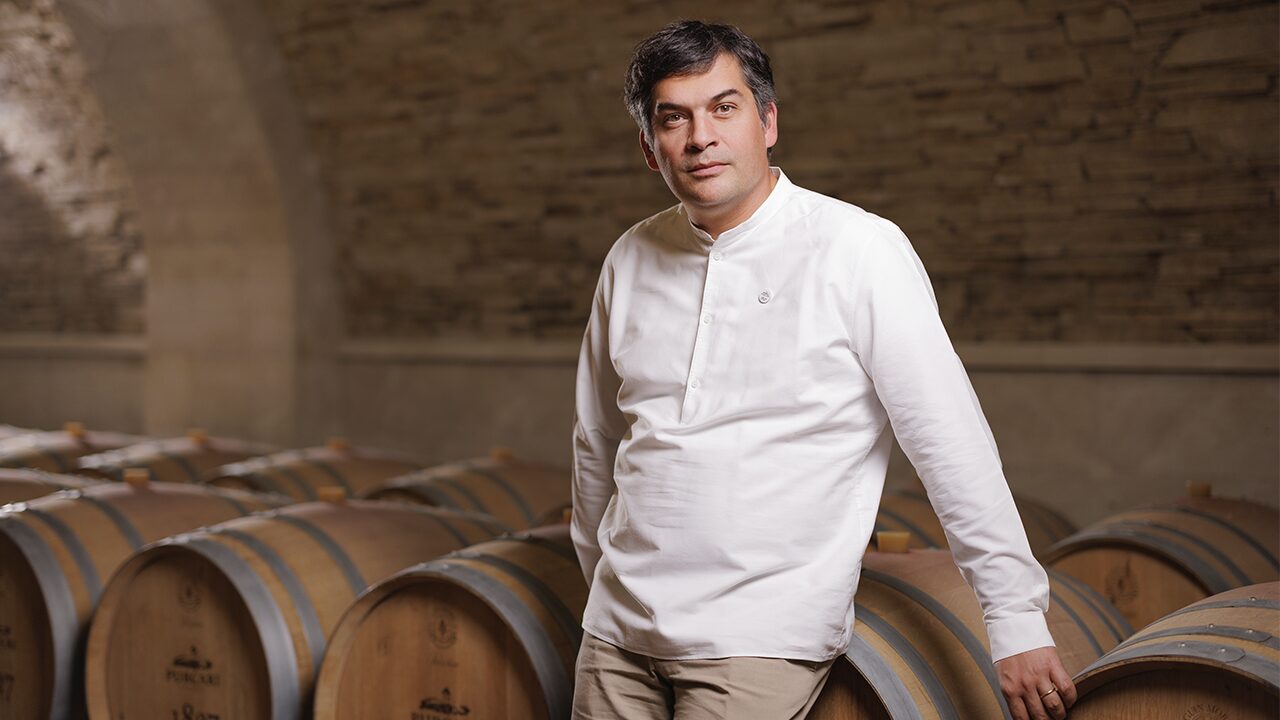
The Power of Investment: An interview with the General Director of Purcari Wineries Group – Alexandru Filip
Purcari Wineries – Investing in the Sustainability of the Terroir: From Climate Risks to Competitiveness
In the coming period, the Foreign Investors Association (FIA) will present a new edition of the White Book – a set of concrete recommendations aimed at improving the investment climate in the Republic of Moldova. Through the series of articles “The Power of Investment,” FIA showcases how foreign investment and advanced standards are reshaping the way industries operate. Alexandru Filip, CEO of Purcari Wineries Group, highlights how long-term strategic investments in terroir, natural resource management, energy efficiency, and transparent digitalization strengthen the company’s sustainability and competitiveness in Moldova, Romania, and Bulgaria.
In the next three to five years, what factors will most strongly influence the evolution of the wine sector?
The first and most important factor for viticulture remains the climate. We can already see the effects of climate change in the vineyards: longer periods of drought, episodes of extreme temperatures, late frosts, hailstorms – all increasingly unpredictable. These phenomena directly affect the quality and quantity of production, including the natural balance of the grapes and the ratio between acidity and sugar content, which is essential for the style and identity of our wines.
At the same time, the European regulatory framework is becoming more demanding. The European Green Deal and the new reporting standards (ESRS/CSRD) require companies to be more transparent, more responsible, and more structured in the way they manage their environmental impact. In my view, this is not a constraint but an opportunity to build better, cleaner, and more sustainably in the long term.
Another key factor is human capital. The wine industry is facing a shortage of specialists, especially in rural areas. At the same time, new skills are needed, particularly in digitalization, precision agriculture, sustainability, and data analysis. For companies like Purcari, investing in people – through education, training, and creating an attractive working environment – is becoming just as important as investing in technology.
And finally, the consumer is changing. Younger audiences pay much more attention to origin, story, and social and environmental responsibility. International competition is becoming more intense, and differentiation is no longer achieved solely through taste but through values and quality. Those who can combine tradition with innovation, authenticity with sustainability, will have a clear advantage in the coming years.
What measures are being implemented in the field and production process to manage these risks?
We started with what is fundamental for viticulture: water and predictable harvests. At Purcari, we operate an advanced irrigation system covering approximately 300 hectares and including two water reservoirs – a project that has significantly increased both the quantity and quality of our harvests. We plan to develop a new irrigation system in the Alexandru Ioan Cuza area (Moldova) as well, although no fixed deadline has been set. In Bulgaria, at Angel’s Estate, the modern irrigation infrastructure already covers most of the plantations, providing stability during dry years.
A second strategic pillar is soil health and biodiversity protection. Through the “Viță & Sol” initiative, we are implementing regenerative practices – seeding cover crops (grass) across more than 30% of our vineyards, using mulching by reintroducing plant material into the soil, and converting part of our vineyards to organic agriculture, currently covering around 25 hectares.
We are also reducing chemical impact through the UV Boost technology – an innovative ultraviolet treatment that significantly reduces the need for phytosanitary products. In the long term, we invest in preserving the local viticultural identity. Through the Rară Neagră 2.0 project, we work with over 150 clones and genetic variations to select those best adapted to current climatic conditions while preserving the authentic character of our terroir.
How do investments in renewable energy and advanced technologies contribute to building a sustainable business model?
For us, sustainability means autonomy, efficiency, and long-term responsibility. This is why we accelerated our transition to renewable energy and expanded our own green power generation capacity. We currently have approximately 500 kW of photovoltaic panels installed at Purcari, 200 kW at Bostavan, 200 kW at Bardar, and 400 kW at Crama Ceptura in Romania. Our medium-term goal is to cover at least 70% of the energy consumption for production processes from renewable sources.
In winemaking, we use technologies that reduce our carbon footprint and optimize energy use. For example, Mythos and Ganymede tanks harness the carbon dioxide generated during fermentation and reuse it for pump-over, reducing energy consumption and greenhouse gas emissions.
For us, technology also means transparency for the consumer. We are introducing digital e-labels on our bottles, providing direct access to information about origin, production process, and ingredients. In parallel, we implement international quality and traceability standards such as ISO.
In the vineyards, we rely increasingly on precision agriculture: smart sensors, aerial imagery captured by drones, and detailed soil scans. Through the Geocarta project, we are finalizing the mapping of our lands, analyzing soil structure, water-retention capacity, and organic content. This data allows us to manage water, nutrients, and crop load much more efficiently, improving vineyard resilience to climate change.
What tangible results are you aiming for customers, employees, investors, and local communities?
For customers, the most important promise we make is consistency of quality and transparency. We closely monitor consumer feedback and trust levels, and in return we commit to delivering an authentic product with clear origin and high standards.
For our employees, especially in rural areas, we aim to provide safer, more modern, and future-ready jobs. Reducing chemical use, introducing smart technologies, and developing precision agriculture create a healthier working environment and real opportunities for professional development at the intersection of viticulture, technology, and sustainability.
For investors, the results translate into a more robust and resilient business model, able to manage climate risks and meet increasingly strict ESG governance and reporting requirements. Operational stability, transparency, and reporting discipline become key drivers of long-term value creation.
For local communities, the impact is concrete and lasting: retaining added value in the region, supporting the local economy, and active involvement in educational, cultural, and environmental initiatives.
Essentially, what we are building at Purcari demonstrates that the viticultural tradition can evolve alongside innovation and sustainability principles, forming a competitive, balanced model aligned with the values we promote.
How do these actions align with the EU’s sustainability and digitalization agenda?
For us, alignment with the European sustainability and digitalization agenda is not a formal exercise but a transformation of how we operate. We modernize internal processes, build a data-driven culture, and adopt rigorous measurement, reporting, and decision-making practices aligned with the principles of the European Green Deal.
We are gradually integrating ESRS standards and the UN Sustainable Development Goals into our strategy, with clear emphasis on SDG 12 – Responsible consumption and production, and SDG 13 – Climate action. We do not treat these frameworks as theoretical references but turn them into concrete, measurable actions.
By investing in renewable energy, we reduce our carbon footprint and protect ourselves from energy price volatility. Through regenerative farming practices, we restore soil organic matter and protect biodiversity. And by deploying digital technologies, we manage critical resources — water, soil, energy, and labor — much more efficiently.
In parallel, we invest in people. We develop the skills of our teams in smart agriculture, data analysis, and ESG management. Because beyond technology, true sustainability means capacity, awareness, and responsibility at the human level.
What principles guide Purcari Wineries’ management model during this transformation?
Our management model is built, above all, on clarity of priorities and consistency in action. In this transformation stage, we are not talking about isolated changes but about evolving the way we make decisions and shape our future.
We integrate ESG principles not only in reporting but also in the operational core of the company, our organizational culture, and our long-term development strategy. Transparency, discipline, and innovation are the guiding markers, together with deep respect for the viticultural heritage that defines the identity of our vineyards.
We value innovation and are open to new technologies, data, and solutions, while remaining true to tradition. I firmly believe that sustainable performance is achieved when innovation grows on strong roots.
Our “2x by 200” strategy reflects this philosophy: ambitious but responsible growth, balanced between expansion and efficiency, financial results and environmental and community impact.
We do not pursue development at any cost. We choose a path built on intelligent resource use, investment in green energy, soil restoration and protection, digitalization, and transparent governance. Our goal is simple yet profound: to ensure the vitality and productivity of Purcari vineyards for future generations.
What policies could accelerate sustainable investment and efficient water management?
First, we need a predictable and efficient national procedural framework. Investments — especially in green infrastructure and irrigation systems — require clear, stable, and coherent rules. We need simplified, digitalized approval procedures with well-defined deadlines, as well as stronger coordination between central and local authorities so that projects are not blocked by fragmented decision-making.
Water management must be treated as a national strategic priority. This requires coherent rules for managing river basins, transparent tariffs and access to infrastructure, and mechanisms that encourage the efficient use of resources.
In parallel, green financing tools must be expanded: state guarantees, credit lines with preferential components, and support schemes dedicated to water efficiency, renewable energy, and sustainable packaging. These tools can significantly reduce investment risk and accelerate the transition to responsible practices.
Finally, rural areas need stronger investment in human capital. Dual-education programs and continuous professional development in precision agriculture, water management, and sustainability will ensure that these investments do not remain just plans on paper but translate into real productivity and export competitiveness.
Together with our partners within FIA, these proposals will be further developed and detailed in the 2025 White Book, as part of a collective effort to build a more resilient and responsible economic model for Moldova’s future.
Source: https://newsmaker.md/ro/purcari-wineries-investitii-in-sustenabilitatea-terroir-de-la-riscurile-climatice-la-competitivitate